

September 2, 2025
10 Knee Strengthening Exercises for Diabetes Knee Pain
Incorporating regular knee exercises in your everyday routine can help to decrease any knee pain you might be experiencing. Learn more about our top six knee strengthening exercises.
Share This Story
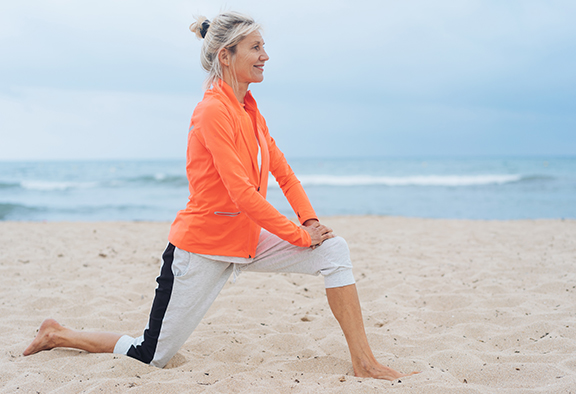
If you’re living with diabetes, you know it can impact your body in numerous ways. Joint pain is a common complaint, especially in the knees. Incorporating regular exercises in your everyday routine can help. Keep reading to learn how to perform our top 10 knee strengthening exercises for diabetes knee pain.
In This Post:
- Does Diabetes Cause Joint Pain?
- Diabetes and Knee Pain
- What Are the Benefits of Knee Strengthening Exercises?
- What Type of Knee Pain Can Exercise Relieve?
- 10 Knee Strengthening Exercises for Diabetes Knee Pain
- When to See a Doctor for Diabetes Knee Pain
- Managing Diabetes and Knee Pain
Does Diabetes Cause Joint Pain?
While diabetes alone may not cause joint pain, it may cause other conditions that lead to joint pain. These include osteoarthritis, neuropathy, and arthropathy. Diabetes also can cause inflammation and stiffness which may result in joint pain.
Diabetes and Knee Pain
Your knees are the largest joints in your body, and since you use them every day, they’re prone to discomfort and injury. But if you’re living with diabetes, there may be added factors to your knee pain. Inflammation, arthritis, diabetic neuropathy, and increased stress on joints due to excess weight, are just some of the ways diabetes knee pain can negatively impact your life. One of the best ways to combat knee pain is by strengthening the muscles that support your knee joints.
What Are the Benefits of Knee Strengthening Exercises?
Knee strengthening exercises don’t strengthen the knee joints themselves but build up the muscles around them. When these muscles are weak, the ligaments and tendons surrounding your knees have to work overtime to support the knees. This can lead to painful conditions like tendonitis and even injury. Helping these muscles grow stronger and more flexible comes with many benefits, ranging from injury prevention to improved management of osteoarthritis.
What Type of Knee Pain Can Exercise Relieve?
Knee pain can be complex. Despite many different causes, many can benefit from knee strengthening exercises. Here are some examples:
- Osteoarthritis
- Tendinitis
- Bursitis
- Overuse/Strain
- Weight-related knee pain
- Meniscus tears
- Sprained ligaments
If you have any of the conditions listed above, consult a physician before trying these exercises.
10 Knee Strengthening Exercises for Diabetes Knee Pain
Since changes to your workout routine can affect your blood sugar, talk to your healthcare team before trying any of the knee strengthening exercises listed in this article. Additionally, make sure to warm up first with activities like a short walk or riding a stationary bike. If you are in severe pain or believe you have a serious injury like a ligament or tendon tear, consult with a doctor before attempting exercise.
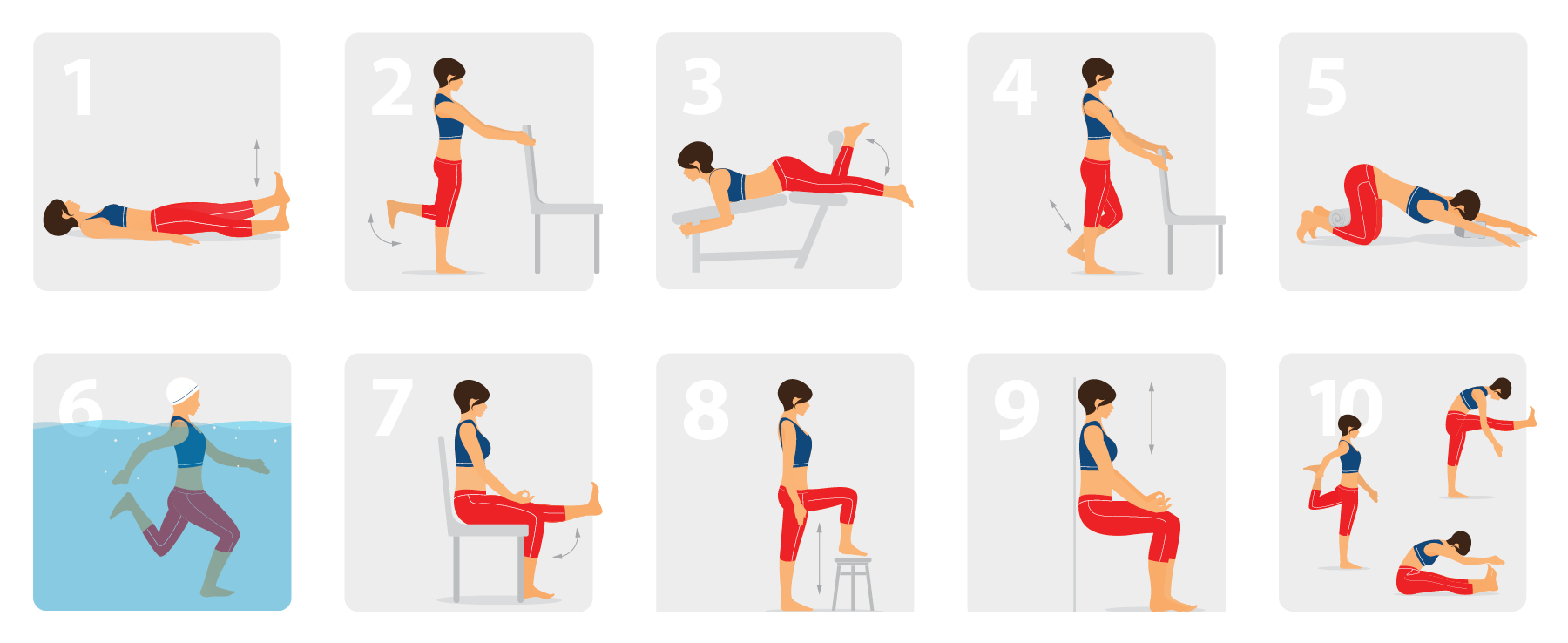
1. Leg Lifts
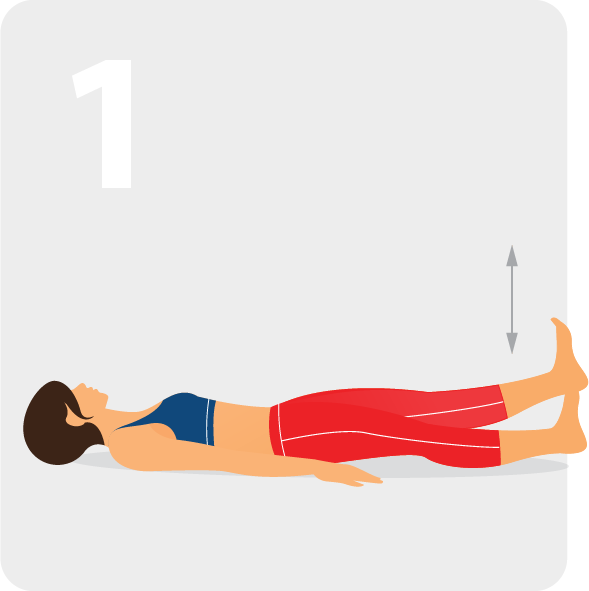
This simple exercise is ideal for working on your quadriceps and abdominal muscles. Start by lying flat on your back on the floor (possibly using a yoga mat or similar floor covering for added comfort). While keeping your left leg flat to the ground, bend your right leg at its knee. Then, bring your abs in – imagine these muscles getting pulled down by your belly button. Your lower back should be pressing toward the floor, not arching upward.
Once you’ve done all this, start gradually lifting your left leg, taking care not to bend your knee. Stop when it’s roughly a foot off the floor and hold it in place for five seconds. Once this time has passed, slowly bring your leg down. Repeat two more times before switching to your right leg.
Keep your back straight during this knee exercise, and don’t let the leg you’re lifting go above the knee of the leg you’re bending. People with back compression pressures or osteoporosis should not perform leg lifts. If this causes back strain or discomfort, do not perform this exercise without assistance from a physical therapist.
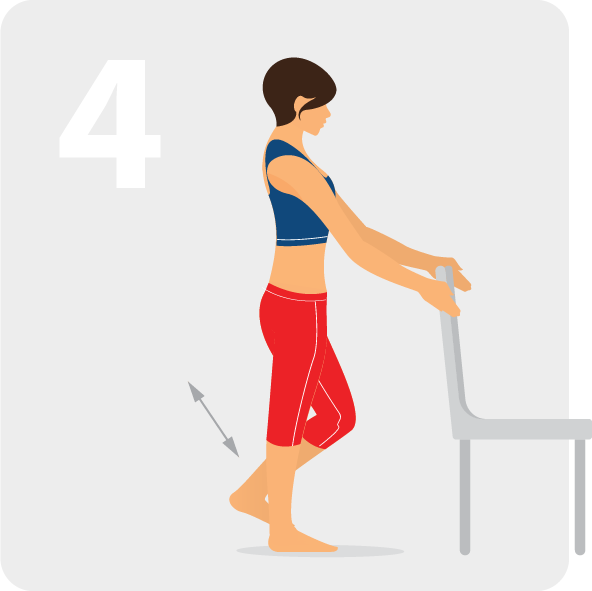
2. Standing Hamstring Curls
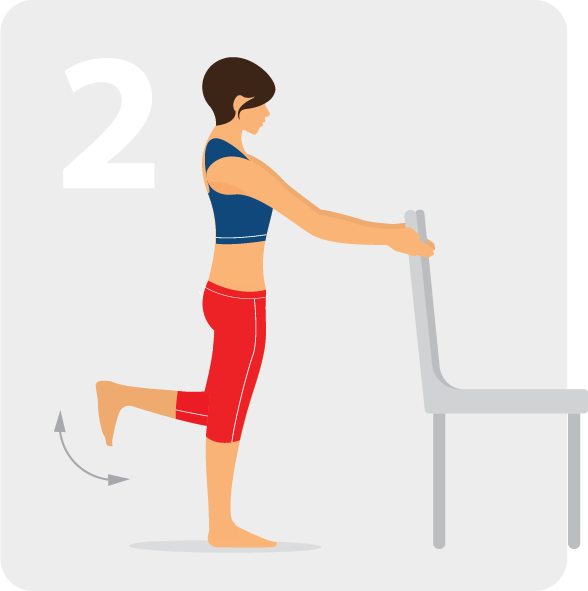
Along with the hamstrings, this exercise will strengthen your gluteal muscles. Stand straight up, keeping your knees an inch or two apart. For balance, lean on a stable object or surface nearby. Bend one of your knees behind you and continue until you have bent this knee at a 90-degree angle. Your straight leg should be slightly bent to prevent it from locking.
After holding your bent leg up for five seconds, bring it back down. Go through this process twice more and switch to the other leg when you’re done. Keep your feet flat throughout the exercise.
3. Hamstring Curls on a Weight Bench
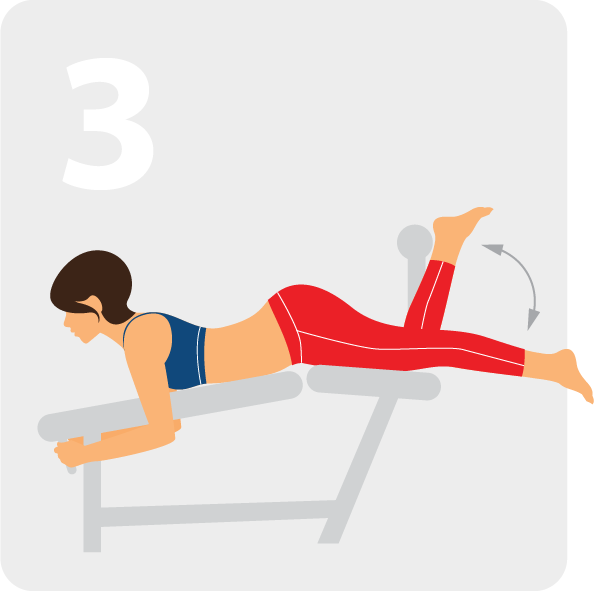
Just like our last exercise, this is perfect for building your gluteal muscles and hamstrings. The stronger these muscles are, the less stress there is on your knees. This is a variation of the standard hamstring curl that incorporates a specially made weight bench.
You’ll start by lying face-down on the bench, keeping your knees close together, and grabbing the bench’s handles. Then, tuck your feet under the weight so that it sits above your heels. Bend both knees gradually and raise the weight with your legs until your knees are at a 90-degree angle. Hold the weight there for five seconds then slowly bring it back down.
There are a few ways to make this exercise easier or more challenging for yourself, depending on your needs. Factors that help determine the intensity level of this workout include the number of reps you do and the weight you use. Never use overly heavy weights if you’re just getting started; instead, use the lightest weight available and build your strength over time. If you experience any discomfort, stop and seek assistance from a physical therapist.
If you don’t have access to a hamstring curl bench or machine, you can mimic the same movement by lying prone on a padded surface and using ankle weights.
4. Single-leg Dip
Targeting the largest muscle groups in the lower body, this exercise may take some building up to, but it’s worth it to strengthen the quads, hamstring, and glutes.
Move two high-back chairs (think dining room chairs) back-to-back and step between them, placing the backs of each chair next to your arms. Use the backs of the chairs as hands rests for balance. Lift one leg 12 inches off the ground and place your weight on the other leg.
Bend down a few inches, pushing your weight onto the heel of the supporting leg. Hold the position for 5 seconds and slowly stand up. Repeat and switch sides.
5. Child's Pose Variation
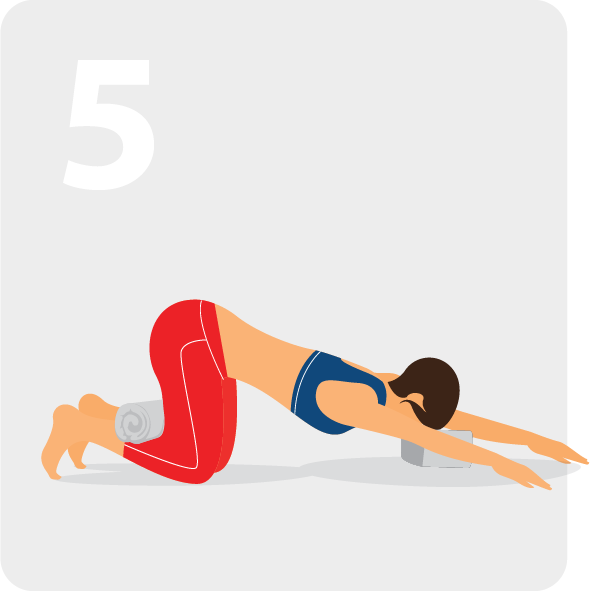
This is a take on the classic yoga move that takes knee flexibility into consideration. Repeated stretches will help increase flexibility over time.
You’ll need a stack of folded towels or a sofa cushion for a head rest and a rolled towel behind your knees. Kneel on the floor and bring your toes together to touch and fold your torso over with your knees wide. Bring your forehead down to rest on the cushion.
Reach your arms over your head and place your hands flat on the floor, shoulder-width apart. Hold the pose for 15 breaths and slowly roll your spine back up to kneeling position. Repeat.
6. Water Jogging
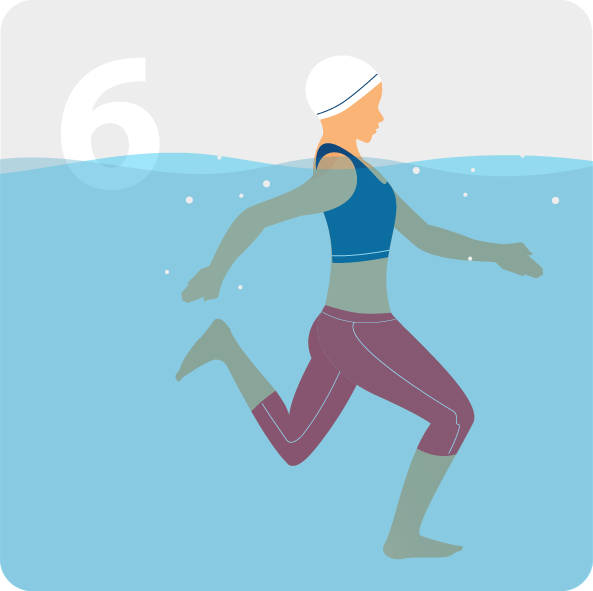
Cardio is still important, even with knee injuries or pain. But running is one of the worst exercises to perform when you’re experiencing knee pain because of the stress it causes your knee joints. To protect your knees, try this gentle form of jogging.
Enter a pool or body of water to chest deep level. Jog in place slowly with your arms braced on a surface for stability. To get the heart pumping, try for 10-15 minute increments.
7. Seated Knee Extension
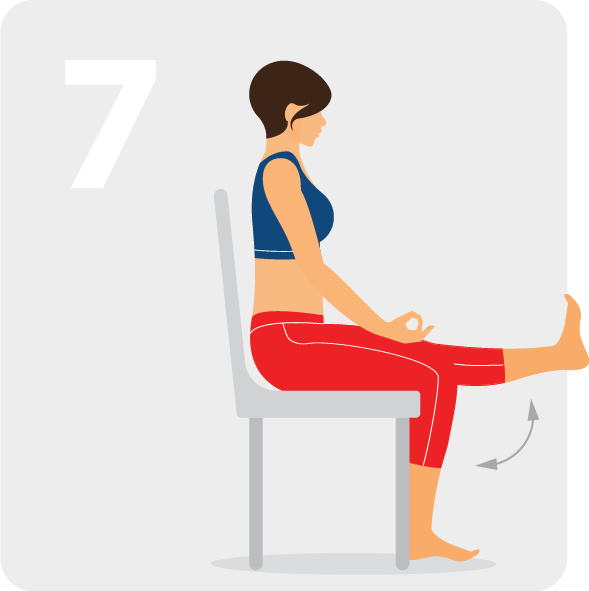
This is a good knee strengthening exercise for days when you don’t have much energy or you’re stuck at your desk.
Sit in a firm chair with your knees bent and feet on the floor. Lift your leg from the ground and contract your thigh muscle. Hold for 5 seconds and return your foot to the ground. Repeat on each side for ten repetitions.
8. Step Exercises
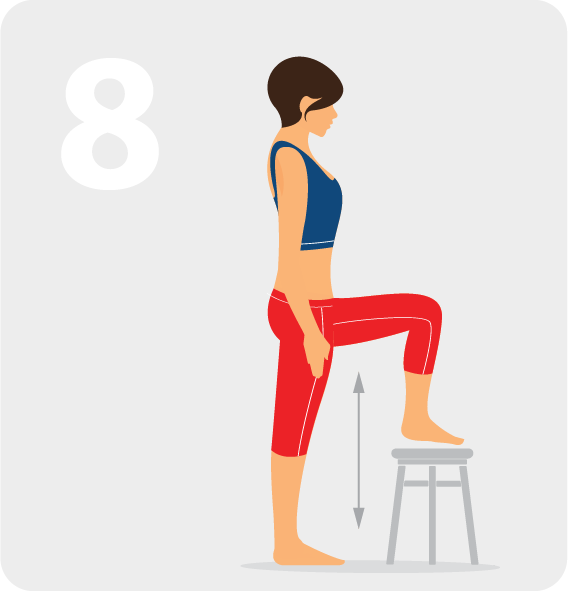
This exercise might look straightforward, but it gets multiple muscle groups moving. Your hamstrings, hip flexors, quadriceps, and gluteal muscles all get a workout.
Before you start doing step exercises, check to make sure you have a stool or exercise platform that’s six inches tall or shorter. Step slowly onto this stool with your right leg, letting your left foot hang behind the platform. Shifting your weight to your right foot, stand on the stool for up to five seconds; then slowly step down, starting with your left foot. Switch legs and repeat.
While performing step exercises, make sure your knees don’t lock and that the stepping foot is entirely on the stool. If you have balance problems, you shouldn’t attempt this type of exercise.
9. Wall Squats
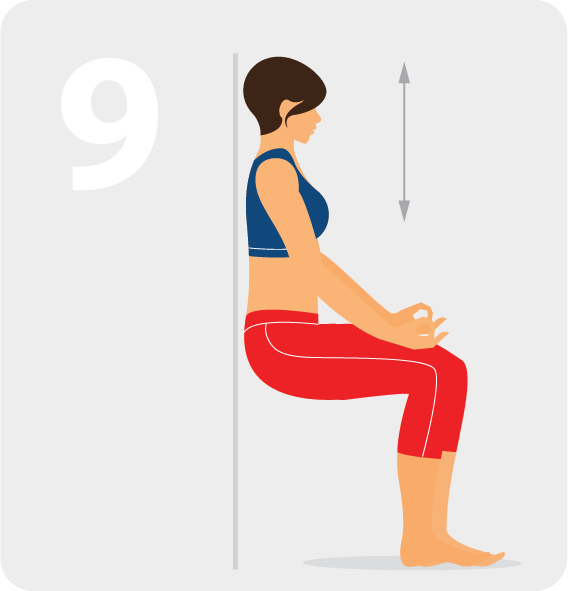
Like many other exercises listed here, this is a great way to develop your gluteal muscles and quadriceps.
Stand against a wall keeping your head, shoulders, back, and hips flat. Step out with both feet so they’re about two feet from the wall, keeping your back and shoulders in place at the same time. Your feet should be separated by the width of your hips at most.
Then, gradually slide down the wall until you’re just above your normal sitting position. Be sure to keep your lower back pressed against the wall, not arching away from it. Hold this pose for five seconds, slide back up the wall, and repeat. Be sure not to squat too low or move too fast while doing this exercise!
10. Post-Exercise Stretching
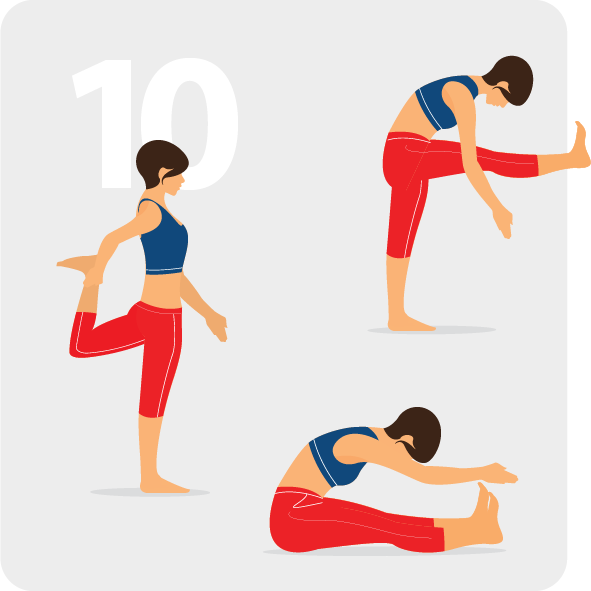
At the end of any workout, be sure to stretch the muscles you’ve been working on. This promotes flexibility while lowering your risk of muscle injury.
- Quadricep Stretch – Lift one foot behind your body and grab your ankle. Meanwhile, hold onto the back of a chair or a wall for balance. Keeping your back straight and your knees close, pull the heel close to your buttocks. Hold it in place for 30 seconds or less, bring your leg back down, and switch sides.
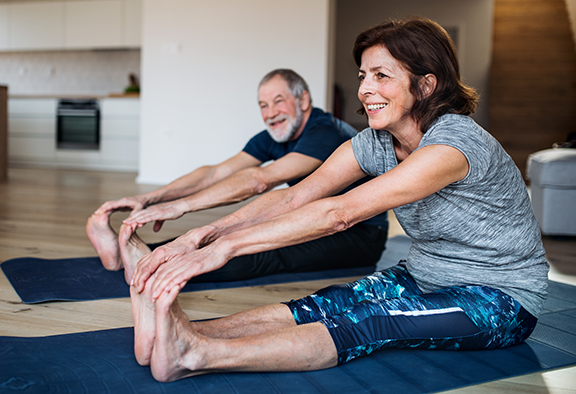
- Toe Touches – Toe touches are perfect for stretching your hamstrings. Put your feet close together, slowly bend at your hips, and bring your arms down. Touch your toes with your fingers and stay in place for 30 seconds. If you can’t quite reach your toes, get as close as you can without pain.
- Standing Hamstring Stretch – Standing hamstring stretches are a good alternative for people with lower back issues that can make toe touches difficult. Stand straight up, keeping your feet shoulder-width apart at most. Bend just a bit at your hips and extend your right leg out in front of you, letting your left leg bend slightly. Keep your back straight, bring your chest down, and bend down as far as you can without discomfort. Hold in place for 30 seconds before returning to your starting position and repeat with the left leg.
When to See a Doctor for Diabetes Knee Pain
If you notice frequent clicking and popping, or experience a “catching” sensation, you may want to consult with your doctor. If the pain is debilitating or you lose range of motion, seek assistance from a doctor to rule out serious injury. Knee pain can have many different causes. If it is persistent or affecting your life, it is important to get checked out by a medical professional. Even if there is no injury, a doctor can refer you to a physical therapist who will help you perform knee strengthening exercises tailored to your treatment plan.
Managing Diabetes and Knee Pain
If you’re struggling with diabetes and knee pain, getting the proper help and doing the appropriate exercises can be life changing. It’s surprising how quickly knee strengthening exercises can alleviate pain when you do them correctly and consistently.
When you’re living with diabetes, you must take care when exercising. Get started by reading about how to plan a diabetes-safe exercise routine and the small changes that can help you get more physical activity. Incorporating tools like continuous glucose monitors can help as well.
At US MED, we understand that managing diabetes is a daily task. We’re here to help as the trusted provider of insulin pens, insulin pumps, CGM systems, and more. Enjoy top-tier service backed by an A+ Rating with the Better Business Bureau. As a Medicare provider and partner with over 500 private insurance carriers, we make getting your supplies easy and hassle-free. Plus, with free shipping and 90-day supplies delivered right to your door, managing your diabetes has never been more convenient. Find out how we’ve built such a strong reputation by placing your first order with us today!
Sources:
https://www.ncbi.nlm.nih.gov/pmc/articles/PMC3635671/
https://www.ncbi.nlm.nih.gov/pmc/articles/PMC9219268/ https://www.ncbi.nlm.nih.gov/pmc/articles/PMC3666539/
Latest Stories

Read Next:
Diabetes, Products, Technology
Different Types of CGM: A Complete Guide

Blog, Diabetes, Products, Technology
What are Continuous Glucose Monitoring Devices and How to Choose a CGM?

Blog, Diabetes, Diet & Fitness
Just Diagnosed With Diabetes: A Guide


AHCA Licensure Numbers: 1313231 and 1314211
For Healthcare Professionals
Payors
Partnership Opportunities
Our Products
Insulin
Insulin Pen Needles & Syringes
US MED® is America's primary choice for home delivery of quality medical supplies. Since 1996, over 1 million satisfied members have received disease state education and medical supplies from our highly trained customer service specialists. US MED®, the largest provider of Diabetic Supplies to the Medicare community, is licensed and accredited by Accreditation Commission for Health Care (ACHC) and maintains an A+ rating from the Better Business Bureau. We provide all products necessary to treat the Diabetes disease state, including therapies for its associated comorbidities. Our product portfolio includes, but is not limited to, the following: Diabetic testing strips, Continuous Glucose Monitors or CGMs, Insulin Pumps, Sleep Apnea and CPAP supplies, and Nebulizers.