

March 2, 2026
What are Continuous Glucose Monitoring Devices and How to Choose a CGM?
Choosing a Continuous Glucose Monitor is a big decision. Here we breakdown the top CGMs, their manufacturers, and features so you can select the right CGM to fit your lifestyle.
Share This Story
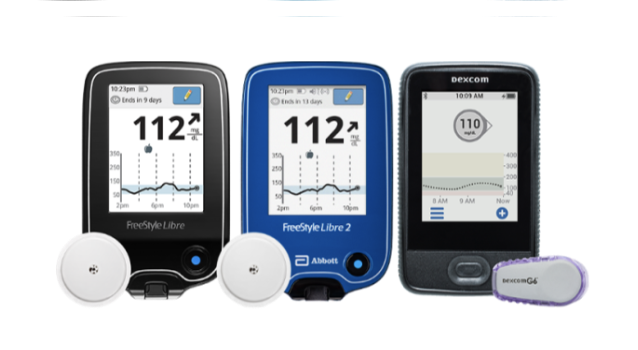
When researching CGMs (Continuous Glucose Monitor) it can be difficult to know which device to choose. In this article we’ll compare the manufacturers of four of the most popular CGM devices on the market today. Then, we’ll go through the individual CGM devices’ features, pros and cons of each, and how to choose between them.
The first thing you should do before deciding on a specific type of continuous glucose monitor is consult your healthcare provider and insurance company. Your physician may have a specific type of CGM in mind for your situation, while your insurance company may only cover a specific CGM model.
After consulting your physician and insurance company, you‘re ready to read on.
CGM Manufacturers
Let’s review the basic components that CGM systems share:
- Sensor: a small wire inserted under your skin on the stomach or back of the arm and is responsible for measuring the blood glucose levels every minute or five minutes
- Transmitter: a wireless component of the sensor and it sends the blood glucose levels to the receiver, reader, or a smart phone app
- Receiver: also called reader, is a separate device that displays the data from the sensor
The way these components work varies among the different manufacturers. Most features on each manufacturer’s CGM are similar. However, some features may be more important to you then others, so it is worth to do a quick review of the four main CGM brands.
Abbott
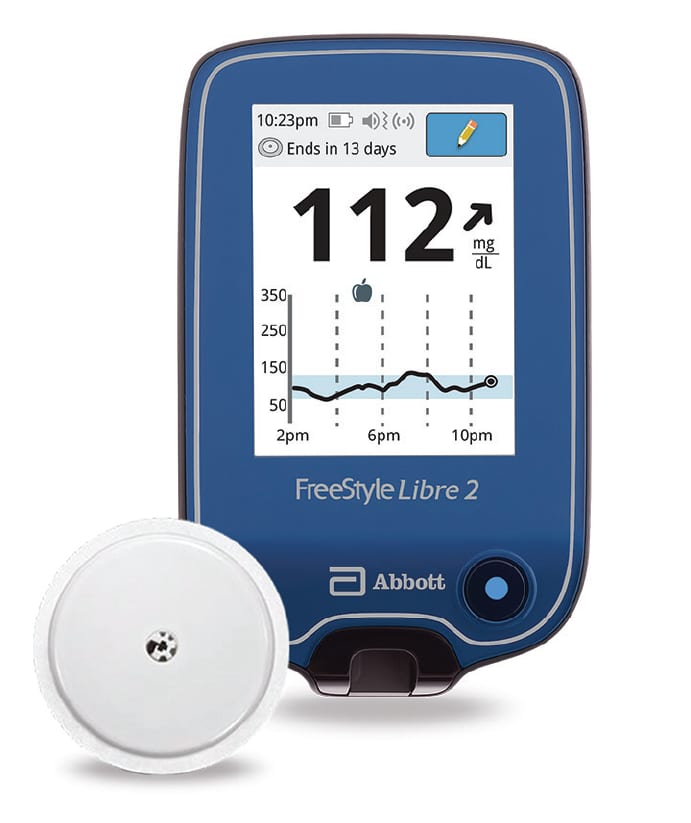
Abbott Laboratories has the longest history of these four companies and was founded in 1888. They are a widely recognized name in industries such as diagnostics, medical devices, nutrition and branded/generic pharmaceuticals. Their CGM was approved by the FDA in 2008. Abbott does not specialize in CGMs or diabetes-related products. However, Abbott’s FreeStyle Libre is a major trendsetter. The FreeStyle Libre 2 was released in 2020.
Dexcom
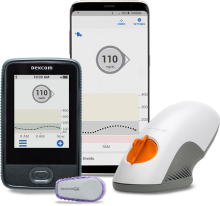
Dexcom was founded in 1999 and in 2006 was the second company to have its CGM approved by the FDA. It is headquartered in San Diego, CA and specializes in developing and creating continuous glucose monitoring systems. Dexcom has partnerships with insulin pump manufacturers Insulet Corporation, which offer the Omnipod DASH® Insulin Management System and Tandem Diabetes Care, which offer the Tandem® t:slim X2® Insulin Pump. For those of you who use an insulin pump, this makes for easy connections to your pumps. US MED offers the Dexcom G7 continuous glucose monitor.
Eversense
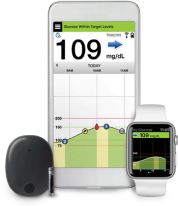
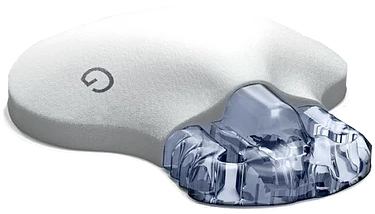
The newest CGM brand is Eversense which is created by Senseonics. Their 90-day implantable CGM was approved by the FDA in 2018. Their 180-day Eversense XL was approved for use in Europe in 2017. Like Dexcom, Eversense specializes in diabetes management systems.
Update: September 2020
On March 26, 2020 Eversense halted sales to new customers and is currently only servicing existing customers.
Medtronic
Medtronic was founded in 1949 and was the first company to gain FDA approval for CGM devices in 2001. Though not focused specifically on diabetes care, Medtronic’s Guardian Sensors are widely used.
Comparing CGM Systems
Now we are going to compare the five types of CGM systems on the market by evaluating their features. These systems have been manufactured by the suppliers listed above and are all high-quality CGM devices. Read through the pros and cons to see which type of system is right for you.
G7
Dexcom’s latest CGM lineup now centers on the Dexcom G7, which is approved for users ages two and older for the standard 10‑day sensor, and ages 18 and older for the new 15‑day G7 sensor. The G7 features an all‑in‑one disposable sensor and transmitter, a major design shift from earlier models. It also offers significantly improved ease of use and accuracy over previous Dexcom generations. The standard G7 sensor lasts up to 10 days, while the newly released G7 15‑Day sensor extends wear time to up to 15.5 days, including a 12‑hour grace period.
Unlike older Dexcom products, including the G5 and G6, the G7 does not require fingerstick calibration, offers a much faster 30‑minute warm‑up, and provides industry‑leading accuracy with a MARD of 8.2% for the standard G7 and 8.0% for the 15‑day sensor. The G7 is also designed to be highly user‑friendly, with a smaller profile, simplified insertion, and compatibility with smartphones, smartwatches, and various automated insulin delivery systems.
All Dexcom G7 sensors continuously track glucose levels and send real‑time alerts when blood sugar is trending too high or too low. Users can share data remotely with caregivers using the Dexcom app, just as with older Dexcom models. The new 15‑day version includes the same full feature set as the 10‑day G7, with the added benefit of fewer sensor changes each month, reduced waste, and improved convenience.
| PROS | CONS |
|---|---|
| Continuous real‑time monitoring with customizable alerts | Sensors must be replaced every 10 or 15 days |
| Longer wear options: 10-day standard G7 or the new 15-day G7 sensor for adults | The 15-day is currently limited to adults 18+ |
| Faster 30-minute warmup, significantly shorter than the G6’s 2-hour warmup | Sensors are not reusable |
| No fingerstick calibration required | |
| Data sent directly to smartphone, smartwatch, or receiver | |
| Approved for users over the age of two | |
| Covered by Medicare, including the new 15-day G7 | |
| Caregiver data-sharing supported through Dexcom Follow app | |
| Waterproof, integrates with Tandem insulin pump and soon the Omnipod 5 |
FreeStyle Libre
Abbott’s Freestyle Libre is a revolutionary CGM device. It was approved in 2017 and is the first CGM that does not require fingerstick calibration or measurements. In terms of ease of use, the Freestyle Libre cannot be beaten; the sensor does not require a physician to apply and lasts fourteen days. The Freestyle Libre reader can store up to ninety days of your blood glucose data, and the sensor itself stores up to eight hours of data.
| PROS | CONS |
|---|---|
| Does not require calibrations. | Reader must be charged once per week. |
| Sensor/transmitter all-in-one replaced every 14 days. | Does not have alerts and alarms. |
| Covered by Medicare. | Can’t reuse sensors. |
| Can use with the reader or a smartphone. | High levels of aspirin and vitamin C are considered interfering substances. |
| Warm-up time 1 hr. | Only approved for users aged 18 or older. |
| Sensor can store eight hours of unread data. | |
| Can share data with caregivers. |
Freestyle Libre 2
Abbott’s newest CGM, the FreeStyle Libre 2, was released in 2020 and is an integrated continuous glucose monitoring (iCGM) system for adults and children ages 4 and older with diabetes. Known for high levels of accuracy, the sensor lasts and provides customizable alarms.
| PROS | CONS |
|---|---|
| Does not require calibrations. | Reader must be charged once per week. |
| Covered by Medicare. | Can’t reuse sensors. |
| Sensor/transmitter all-in-one replaced every 14 days. | High levels of vitamin C may cause false readings. |
| Warm-up time 1 hour. | |
| Approved for users as young as 4. | |
| Can use with the reader. |
Guardian Sensor 4
Medtronic’s earlier CGM system, Guardian Sensor 3, provided continuous glucose readings with a 7‑day sensor life and required regular fingerstick calibrations, typically every 12 hours. It was approved for ages 2+ depending on pump system, but readings were susceptible to inaccuracy when taking acetaminophen, which could falsely elevate glucose values.
Today, Medtronic has transitioned to the Guardian 4 sensor—its latest, calibration‑free CGM designed to work with the MiniMed 780G insulin pump system. Unlike Guardian Sensor 3, the Guardian 4 requires no fingerstick calibrations, features the same 7‑day wear duration, and delivers real‑time readings every 5 minutes. The Guardian 4 is also approved for ages 7 and older, with updated insertion‑site options depending on age group.
The Guardian 4 system eliminates many of the limitations of Guardian Sensor 3—particularly around calibration burden and medication interference—and is optimized for use with Medtronic’s automated insulin delivery (AID) technology.
| PROS | CONS |
|---|---|
| No fingerstick calibrations required, unlike the Guardian Sensor 3 | Sensor only lasts 7 days |
| Real-time glucose readings every 5 minutes | 2-hour warm up period |
| Integrates with the MiniMed 780G system for automated insulin delivery | Accuracy can vary depending on placement, with MARD values around 9-10.5% higher vs competing CGMs |
| Approved for ages 7 and beyond | Limited insertion-site options depending on age (upper arm or abdomen only) |
| Predictive alerts can warn of highs and lows in advance |
Eversense—Implantable CGM
The Eversense Implantable CGM uses an implanted sensor, which means that you don’t have to worry about changing anything for 90 days. Because this CGM system uses an internal sensor, the transmitter still has to be placed on your skin, so you will still have part of the device visible. The Eversense CGM system uses continuous monitoring of your blood glucose levels. Because your levels are constantly monitored, alarms will sound when they go either too high or too low.
| PROS | CONS |
|---|---|
| Sensor can be worn for up to 90 days, transmitter lasts 1 year. | Sensor must be implanted surgically. |
| Must be used with the user-friendly app from your smartphone, highly customizable. | Transmitter is visible on the skin. |
| Alarms tell you when your blood sugar is too high or low. | Requires calibrations twice per day. |
| Readings not affected by acetaminophen. | Only approved for users aged 18 or older. |
| Can share data with caregivers. | Sensors are not reusable. |
Conclusion: Choosing Your CGM System
As you can tell, the four types of CGM have similarities and differences. You will find some variation in the location of the sensor (inside or outside your skin), the alarm system, the approved age range, and the sensor life. But, other than that, all four types of CGM deliver the same basic functions: continuously monitoring blood glucose levels without the need for fingersticks. Get your physician’s recommendation, but feel free to discuss with him or her the pros and cons listed above and which CGM system will best fit your lifestyle before choosing a CGM system. If you have questions on the FreeStyle Libre, Freestyle Libre 2, or the Dexcom G7, or are wondering what your insurance benefits cover, contact US MED’s customer service team by phone or by filling out this form.
Phone: 1-877-840-8218
If you need help using your CGM system for the first time, read US MED’s how-to guide right here. Find out more about CGM-compatible apps here.
Click here to learn more about Freestyle Libre CGMs.
Disclaimer
This content is for informational purposes only and is not a substitute for medical advice. Check with your healthcare provider before making changes to your health routine.
Latest Stories

Read Next:
Diabetes, Products, Technology
Different Types of CGM: A Complete Guide
Blog, Diabetes, Products, Technology
What are Continuous Glucose Monitoring Devices and How to Choose a CGM?

Blog, Diabetes, Diet & Fitness
Just Diagnosed With Diabetes: A Guide


AHCA Licensure Numbers: 1313231 and 1314211
For Healthcare Professionals
Payors
Partnership Opportunities
Our Products
Insulin
Insulin Pen Needles & Syringes
US MED® is America's primary choice for home delivery of quality medical supplies. Since 1996, over 1 million satisfied members have received disease state education and medical supplies from our highly trained customer service specialists. US MED®, the largest provider of Diabetic Supplies to the Medicare community, is licensed and accredited by Accreditation Commission for Health Care (ACHC) and maintains an A+ rating from the Better Business Bureau. We provide all products necessary to treat the Diabetes disease state, including therapies for its associated comorbidities. Our product portfolio includes, but is not limited to, the following: Diabetic testing strips, Continuous Glucose Monitors or CGMs, Insulin Pumps, Sleep Apnea and CPAP supplies, and Nebulizers.